How do you plan plumbing and water treatment for a luxury espresso setup?
Water is most of what is in your cup, and scale is the quiet killer of machines. Planning it protects both.
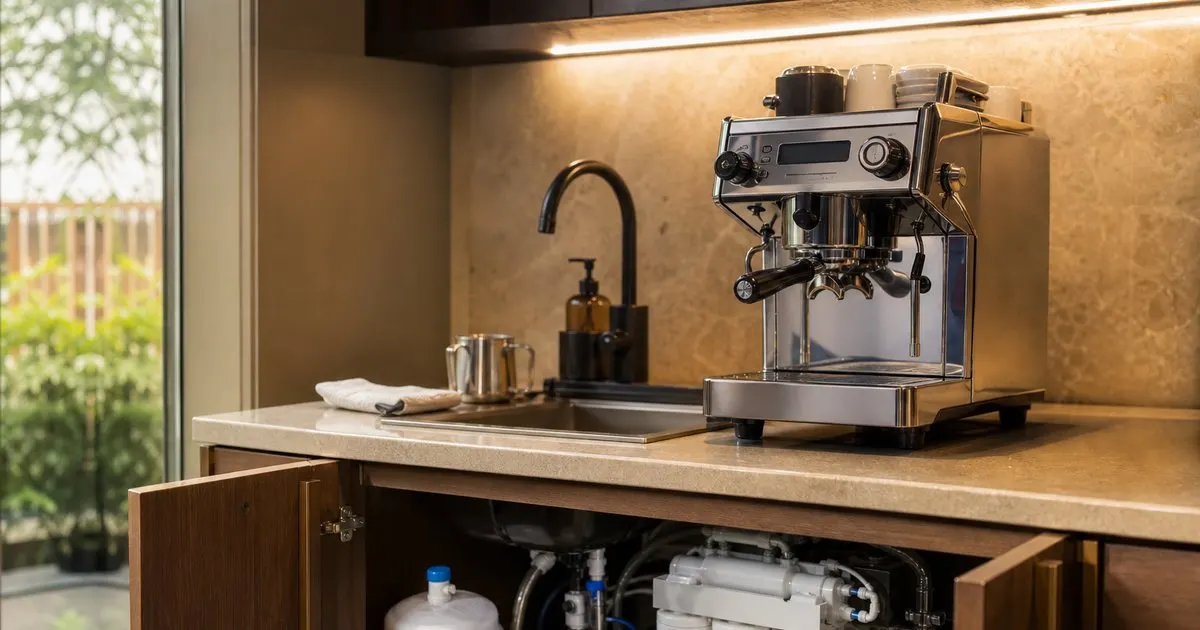
Start by testing your water hardness, then aim for balanced water that tastes good and resists scale, the quiet killer of espresso machines. Choose between a tank with treated water, a coffee-specific filter, or plumbing a rotary-pump machine into a filtered line. Always pair plumbing with proper filtration, and plan the water route before buying.
Why water matters twice
Water is the largest ingredient in espresso, so its mineral content shapes the taste directly, influencing extraction and clarity. Beyond flavor, water chemistry determines how quickly scale builds inside the machine, which can shorten its life if left unmanaged. Related: What actually separates a prosumer espresso machine from an everyday home model?
This dual role, taste and machine health, is why serious owners treat water as part of the setup rather than an afterthought. Getting it right improves the cup and protects the substantial investment the machine represents. Related: How important is a dual boiler when choosing a luxury espresso machine?
Keep reading: What actually separates a prosumer espresso machine from an everyday home model?, How important is a dual boiler when choosing a luxury espresso machine?, Should you pair your espresso machine with a separate high end grinder?. See how Cremaholm helps you a connoisseur guide to prosumer and luxury espresso machines.
Understanding scale and hardness
Hard water, rich in minerals, leaves scale that clogs passages and damages boilers over time, often quietly until performance suffers. Very soft or aggressive water can cause other problems, so the aim is balanced water rather than simply the softest.
Testing your water hardness is the starting point. Once you know what you are working with, you can choose treatment that both tastes good and keeps scale at bay, avoiding the expensive descaling and repairs that neglected water eventually forces.
Tank, filter, or plumbing
Many machines run from a tank, which is simple and lets you use treated or bottled water tailored for espresso. Filters designed for coffee can soften and balance tap water, offering a convenient middle path without permanent installation.
Rotary-pump machines can often plumb directly into a treated water line, removing the refilling chore and stabilizing supply. Plumbing in requires a suitable connection and, importantly, proper filtration on that line, since plumbing untreated hard water in only speeds scale damage. Related: Is a lever, rotary, or vibration pump machine right for your kitchen?
Planning the installation
Decide early whether you want the simplicity of a tank or the convenience of plumbing, since it affects placement and the machine you choose. If plumbing in, plan the water line, a drain if the machine needs one, and the filtration together.
Whichever route you take, build treatment into the plan rather than adding it later. Balanced water is one of the least glamorous but most rewarding parts of a luxury setup, quietly improving every cup and extending the machine's working life. Related: Which build materials and boilers hold up best in a prosumer espresso machine?
- Water shapes both the taste of espresso and how fast scale builds.
- Test hardness first, then aim for balanced water rather than the softest.
- Choose between a tank, a coffee filter, or plumbing into a treated line.
- Plan filtration with any plumbing, since untreated hard water speeds damage.

Julien Jimenez
Julien Jimenez is an independent software builder based in Paris. He designs, ships, and operates focused SaaS products for small businesses and independent professionals. Read the full author page.
Frequently asked questions
Can I just use tap water in an espresso machine?
It depends on your local water. Hard tap water builds scale that damages the machine, while very soft or aggressive water causes other issues. Test your hardness and treat the water to reach a balanced, machine-safe result.
Is plumbing in worth it?
For rotary-pump machines it adds real convenience by removing refills and stabilizing supply. It requires a suitable connection and proper filtration on the line, so plan the water treatment alongside the plumbing itself.
Cafe-Grade Espresso, At Home
A connoisseur guide to prosumer and luxury espresso machines. Cremaholm is built to help you put this into practice.
Find your machineMore from the Cremaholm blog
Get the complete espresso machines guide
Our full buying guide, the price guide, and new research as we publish it. One email, no spam, unsubscribe any time.