What should a buyer do when considering a used high end espresso machine?
Secondhand luxury machines can be superb value or an expensive project. A methodical inspection separates the two before money changes hands.
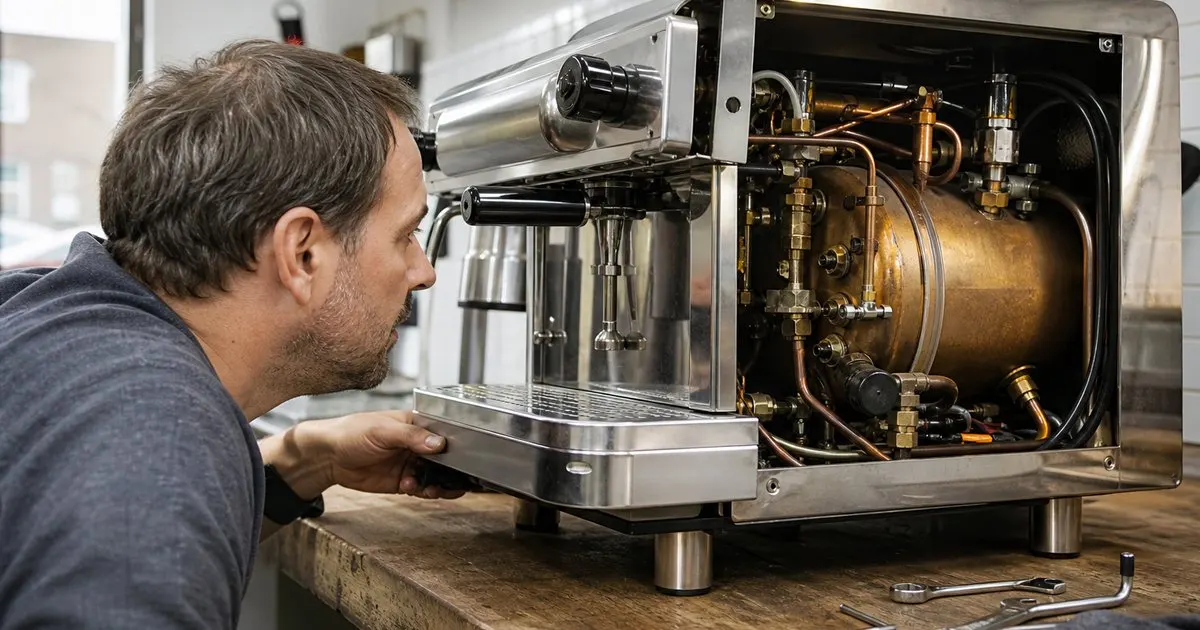
Why the used market is worth your attention
Luxury espresso machines are built for commercial duty cycles, so a home machine that has pulled a few shots a day for several years has often lived an easy life. Owners upgrade, move, or lose interest, and well maintained examples appear regularly through enthusiast forums, specialty retailers that take trade-ins, and local listings. Because these machines are fully rebuildable, a good used example can serve for decades, which is not something you can say of most kitchen appliances. Related: What actually separates a prosumer espresso machine from an everyday home model?
The catch is that neglect hides well behind polished steel. Scale inside a boiler, a corroded heating element, or perished gaskets are invisible from the outside, and the previous owner may genuinely not know the machine's condition. Your job is to find out, and to price the purchase to include the parts and labor that bring the machine back to as-new performance. Related: How important is a dual boiler when choosing a luxury espresso machine?
Keep reading: What actually separates a prosumer espresso machine from an everyday home model?, How important is a dual boiler when choosing a luxury espresso machine?, Should you pair your espresso machine with a separate high end grinder?. See how Cremaholm helps you a connoisseur guide to prosumer and luxury espresso machines.
Questions to ask before you travel
Ask what water the machine was fed. A machine run on filtered, softened, or properly remineralized water is a different proposition from one run on hard tap water, and an honest seller will tell you. Ask whether it was plumbed in or used from a tank, how often it was descaled or serviced, and whether any parts have been replaced. Request the original receipt and any service invoices; a seller who has them tends to be the kind of owner you want to buy from. Related: How do you plan plumbing and water treatment for a luxury espresso setup?
Ask why they are selling and how long the machine has been idle. A machine that sat unused for a year with water in the boilers can develop corrosion and stale, musty flavors that take time to flush out. Ask for a short video of the machine heating up, pulling a shot, and steaming, with the sound audible. Pump noise, leaks, and slow warm-up are easier to spot on video than in a photo. Related: Which build materials and boilers hold up best in a prosumer espresso machine?
The in-person inspection
Bring a flashlight, a fresh bag of coffee, and a portafilter basket you know. Remove the drip tray and look for mineral crust and green or white deposits around fittings. Pull the shower screen if the seller allows and examine the group gasket, which should be pliable rather than rock hard. Watch the pressure gauges during a shot and while steaming; a brew pressure that swings wildly or a steam boiler that struggles to hold pressure indicates a pump, pressurestat, or scale problem.
Listen to the pump. A vibration pump that has become noticeably louder or a rotary pump that whines may be nearing the end of its life. Check the power cord and plug for heat damage, test every switch and valve, and look under the machine for water stains that suggest a slow leak. Finally, taste the shot. Metallic or stale flavors can be flushed out, but they tell you the machine needs a thorough service before it lives in your kitchen.
Pricing, shipping, and the refurbishment budget
Assume every used machine needs a gasket set, a fresh shower screen, and a descale unless the seller demonstrates otherwise, and budget for a pump and vacuum breaker on older examples. Compare the asking price against a new machine with a full warranty; the discount must cover the parts, your time or a technician's labor, and the absence of manufacturer support. For a machine only a few years old with documented service, a modest discount can be fair. For an older, undocumented one, it should be substantial.
If the machine must ship, insist on the original packaging or a professional crate. Boilers should be drained, and heavy machines are best sent on a pallet through a freight service rather than as a parcel. Some specialty retailers sell certified refurbished machines with a short warranty; they cost more than a private sale but remove most of the risk. We may earn a commission from some of those retailers, and we would still say the same thing.
- Ask about water treatment and service history first; they predict the machine's internal condition.
- Inspect gaskets, gauges, pump sound, and the underside for leaks before agreeing on a price.
- Budget for gaskets, a descale, and possibly a pump even on a machine that looks pristine.
- Freight on a pallet and original packaging protect a heavy machine in transit.

Julien Jimenez
Julien Jimenez is an independent software builder based in Paris. He designs, ships, and operates focused SaaS products for small businesses and independent professionals. Read the full author page.
Cafe-Grade Espresso, At Home
A connoisseur guide to prosumer and luxury espresso machines. Cremaholm is built to help you put this into practice.
Find your machineMore from the Cremaholm blog
Get the complete espresso machines guide
Our full buying guide, the price guide, and new research as we publish it. One email, no spam, unsubscribe any time.