How do you prepare the electrical circuit for a commercial grade espresso machine at home?
Some luxury machines plug into an ordinary outlet. Others need a dedicated circuit or 240 volt service. Know which before the machine is on the counter.
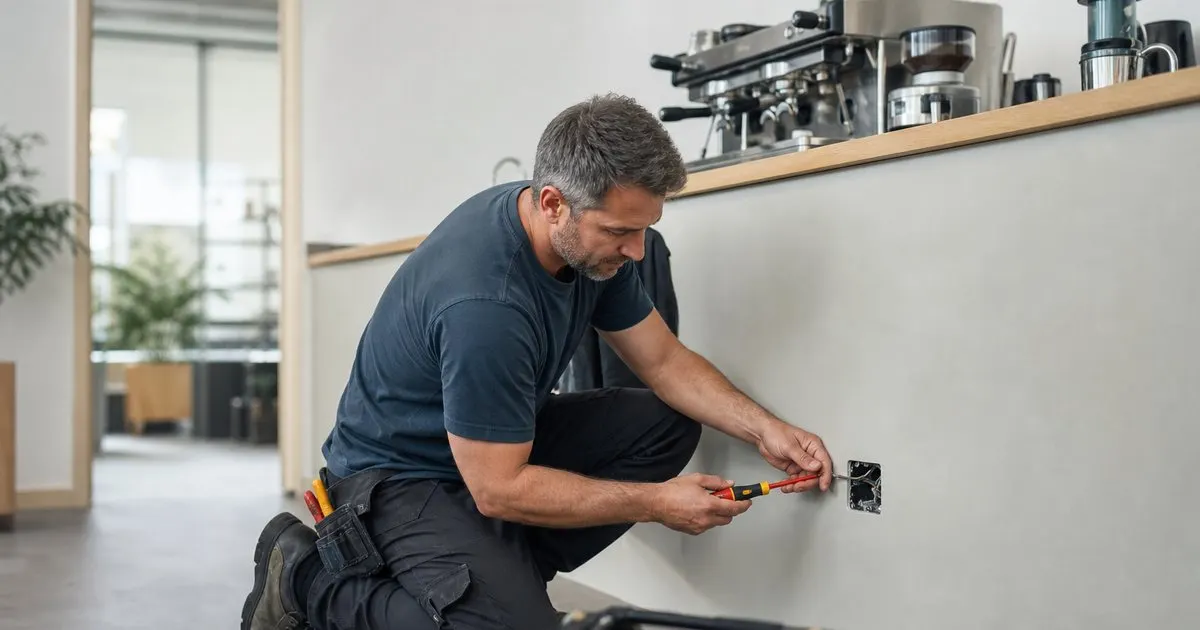
Reading the plate: volts, amps, and watts
Every machine carries a rating plate listing its voltage, frequency, and either wattage or amperage. In the United States most prosumer machines are designed for standard 120 volt service and draw somewhere in the range of twelve to fifteen amps at full heat, which is at or near the limit of a typical fifteen amp household circuit. Larger dual boiler machines and most single group commercial designs are built for 220 to 240 volt service, and some can be configured for either voltage at the factory or by a technician. Related: What actually separates a prosumer espresso machine from an everyday home model?
The distinction matters because a 120 volt machine sharing a circuit with a toaster or a microwave will trip the breaker at the worst possible moment, and because a 240 volt machine simply cannot be plugged into a normal kitchen receptacle. Before you fall in love with a specific model, find its rating plate details in the manual and match them to what your kitchen can supply.
Keep reading: What actually separates a prosumer espresso machine from an everyday home model?, How important is a dual boiler when choosing a luxury espresso machine?, Should you pair your espresso machine with a separate high end grinder?. See how Cremaholm helps you a connoisseur guide to prosumer and luxury espresso machines.
Dedicated circuits and the twenty amp question
A dedicated circuit means a breaker and wiring run that serve only the espresso machine, so nothing else can share the load. For a high draw 120 volt machine this is the single most valuable electrical upgrade, and it is a routine job for a licensed electrician if the panel has space. Many kitchens built to modern code already have twenty amp small appliance circuits, which give useful headroom. A twenty amp receptacle has a distinctive T shaped neutral slot, and a machine fitted with a twenty amp plug will only fit that receptacle. Related: How important is a dual boiler when choosing a luxury espresso machine?
Be careful with the reverse: a machine with a standard fifteen amp plug will fit a twenty amp receptacle and run happily, but the wiring behind a fifteen amp receptacle must never be upgraded to a twenty amp breaker without also upgrading the conductor gauge. That is an electrician's decision, not a homeowner's. Whatever the configuration, avoid extension cords and power strips entirely; the sustained current of a heating element is precisely what those devices are worst at handling.
Bringing 240 volt service to a kitchen
If you have chosen a commercial single group machine, you will typically need a 240 volt circuit terminated in a receptacle that matches the machine's plug, or a hardwired connection through a disconnect. Kitchens often already have 240 volt service for an electric range or wall oven, which tells you the panel can support it, but that circuit cannot be shared. A new run from the panel to the espresso station is usually required, and the cost depends heavily on distance and whether walls must be opened. Related: Should you pair your espresso machine with a separate high end grinder?
Ask the retailer which plug configuration the machine ships with, because commercial machines from overseas sometimes arrive with bare leads or a plug intended for another market. Your electrician will need the machine's amperage rating and plug type to install the correct receptacle. Plan this weeks before delivery; a beautiful machine sitting uninstalled on the counter while you wait for a trade appointment is a common and entirely avoidable frustration. Related: How do you plan plumbing and water treatment for a luxury espresso setup?
GFCI, grounding, and living with the installation
Kitchen countertop receptacles in the United States are required to have ground fault protection under current electrical codes, and a heating appliance near water is exactly what that protection is for. Some espresso machines, particularly older designs or those with certain heating element configurations, occasionally trip GFCI devices due to small leakage currents. If yours does, do not remove the protection; have an electrician investigate, because persistent tripping can indicate an element or wiring fault that deserves attention.
Once installed, keep the plug and receptacle dry, check the cord occasionally for warmth or discoloration at the plug, and never run the machine through a timer or smart plug that is not rated for its full amperage. Good electrical preparation is invisible once done. The machine heats without complaint, the breaker never trips during a dinner party, and you forget the subject entirely, which is precisely the goal.
- Match the rating plate's voltage and amperage to your kitchen before choosing a machine.
- A dedicated circuit is the most valuable upgrade for any high draw 120 volt machine.
- Commercial machines usually need a new 240 volt run; plan it weeks before delivery.
- Keep GFCI protection in place and have persistent tripping diagnosed by an electrician.

Julien Jimenez
Julien Jimenez is an independent software builder based in Paris. He designs, ships, and operates focused SaaS products for small businesses and independent professionals. Read the full author page.
Cafe-Grade Espresso, At Home
A connoisseur guide to prosumer and luxury espresso machines. Cremaholm is built to help you put this into practice.
Find your machineMore from the Cremaholm blog
Get the complete espresso machines guide
Our full buying guide, the price guide, and new research as we publish it. One email, no spam, unsubscribe any time.