How do you choose finishes and custom panels so an espresso machine suits your kitchen?
At this level the finish is a real decision, not a color swatch. Here is how polished, brushed, coated, and wood options behave over years of daily use, and how to make one sit right in your room.
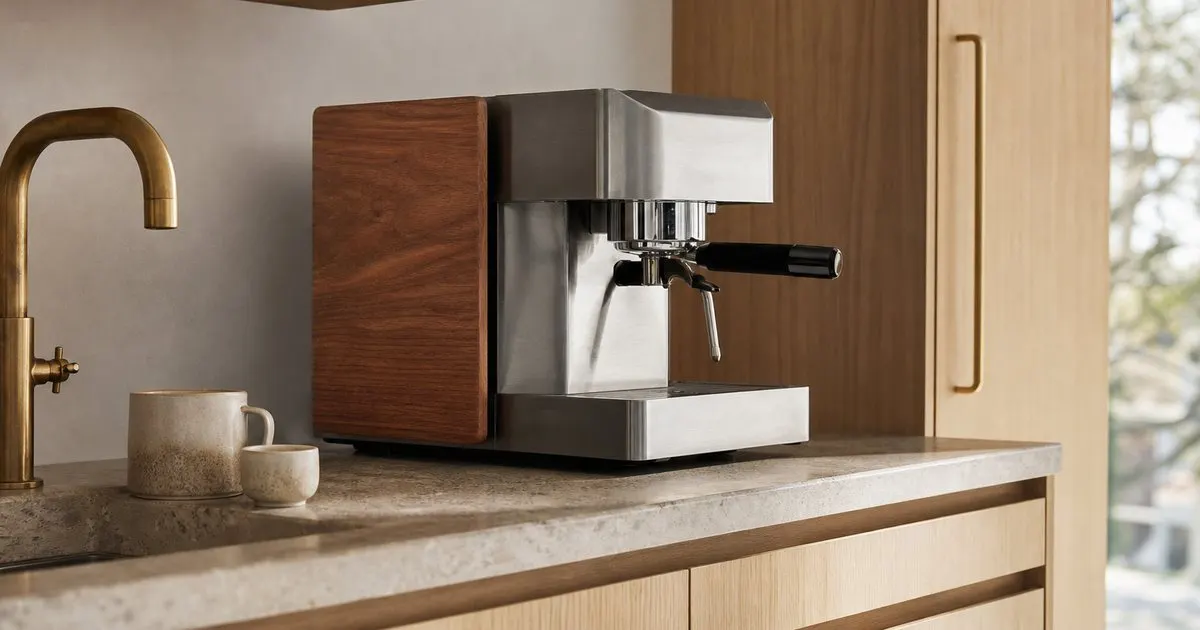
How each finish actually behaves over years, not in photographs
Polished chrome is the traditional answer for a reason. It is a hard plated surface that shrugs off steam, tolerates heat near the group, and cleans to a mirror with a damp cloth. Its cost is honesty: it records every fingerprint and water spot, so the machine looks its best only when it has just been wiped. In a household where the machine is used four times a day and admired constantly, that is a daily obligation. In a household where nobody minds, chrome ages beautifully and stays repairable, since replating is a real service option decades later. Related: How important is a dual boiler when choosing a luxury espresso machine?
Brushed and satin stainless take the opposite trade. The grain scatters light and hides fingerprints, marks, and the fine scratches that accumulate around the drip tray and portafilter arc. It never reaches the depth of polished chrome, and cleaning along the grain matters if you want it to stay even. Powder coated and painted panels widen the palette to matte black, deep colors, and off-whites, which can make a large machine recede visually, but coatings are the least forgiving surface for chipping at corners and edges, and touch-up rarely disappears completely.
Keep reading: What actually separates a prosumer espresso machine from an everyday home model?, How important is a dual boiler when choosing a luxury espresso machine?, Should you pair your espresso machine with a separate high end grinder?. See how Cremaholm helps you a connoisseur guide to prosumer and luxury espresso machines.
Reading the room before you read the configurator
Look first at metal temperature. Kitchens tend to be built around either cool metals, meaning chrome, nickel, and stainless in the faucet, pulls, and appliance fronts, or warm metals, meaning brass, bronze, and copper. A machine that fights the established family reads as an intrusion no matter how handsome it is on its own. If your hardware is unlacquered brass and your machine will be polished chrome, plan a deliberate bridge such as brass portafilter handles, a brass tamper on the counter, or a wood element that carries warmth back into the group. Related: What actually separates a prosumer espresso machine from an everyday home model?
Then look at value contrast against the counter and the wall behind it. A stainless machine on a light stone counter with a light backsplash tends to disappear in a way many owners like, while the same machine against dark cabinetry becomes the focal point of the room. Neither is wrong, but decide which you want before ordering, because the machine will be there for fifteen years. If it sits under upper cabinets, also check that a tall reflective front will not simply mirror the underside of a cabinet at eye level.
Custom panels, wood, and decisions made at order time
Most makers in this segment offer side panels and small trim parts in alternative materials, commonly hardwoods, painted metal, or occasionally stone and leather. These are usually built to order, so the lead time on a customized machine is typically measured in weeks rather than days, and in some cases a custom finish is not covered by the same return terms as a stock configuration. Ask your dealer three questions before committing: what the added lead time is, whether the panels can be purchased separately later, and whether a future replacement panel is likely to match an aged original. Related: Should you pair your espresso machine with a separate high end grinder?
Wood is the most rewarding and the most demanding choice. Walnut, oak, and other hardwoods bring warmth to a machine that is otherwise all metal, and they age gracefully if kept away from direct steam and standing water. Oiled finishes can be refreshed at home, while lacquered ones cannot easily be repaired if they craze near a heat source. Avoid wood immediately adjacent to the steam wand path or the drip tray splash zone. Portafilter handles and steam knobs in wood are a low-risk way to test the look before committing to full side panels. Related: How do you plan plumbing and water treatment for a luxury espresso setup?
Living with the finish, and what it means at resale
Set a cleaning habit that matches the surface. Polished chrome wants a soft microfiber and, in hard water areas, a wipe after steaming rather than at the end of the day, since dried mineral spots are much harder to remove than fresh ones. Brushed stainless prefers a damp cloth worked along the grain and an occasional dedicated stainless product. On coated panels, avoid abrasive pads entirely and keep descaling solution off the exterior, because acids that are harmless to a boiler interior can dull a coating permanently.
Finish also shapes what happens when you sell. Classic polished machines in standard configurations tend to find buyers most easily, since they suit the widest range of kitchens, while a strongly personalized color or an unusual panel material narrows the audience even when the machine is mechanically perfect. That is not a reason to avoid customizing, but it is a reason to keep the original panels boxed if you swap them. Returning a machine to its factory look before listing it is often the single easiest thing an owner can do to make it appealing.
- Polished chrome cleans easily and can be replated decades later, but it shows every fingerprint and water spot.
- Brushed stainless hides daily marks and suits busy households; coated panels expand the palette but chip at edges.
- Match the metal temperature of your existing hardware, or bridge it deliberately with wood or brass accents.
- Custom panels add lead time and can narrow resale, so keep the original set boxed if you change them.

Julien Jimenez
Julien Jimenez is an independent software builder based in Paris. He designs, ships, and operates focused SaaS products for small businesses and independent professionals. Read the full author page.
Cafe-Grade Espresso, At Home
A connoisseur guide to prosumer and luxury espresso machines. Cremaholm is built to help you put this into practice.
Find your machineMore from the Cremaholm blog

Get the complete espresso machines guide
Our full buying guide, the price guide, and new research as we publish it. One email, no spam, unsubscribe any time.