What should a homeowner do when a luxury espresso machine sits unused for several weeks?
Long absences are harder on a prosumer machine than daily use. Here is how to shut one down for a trip, protect it from freezing and stagnation, and bring it back cleanly.
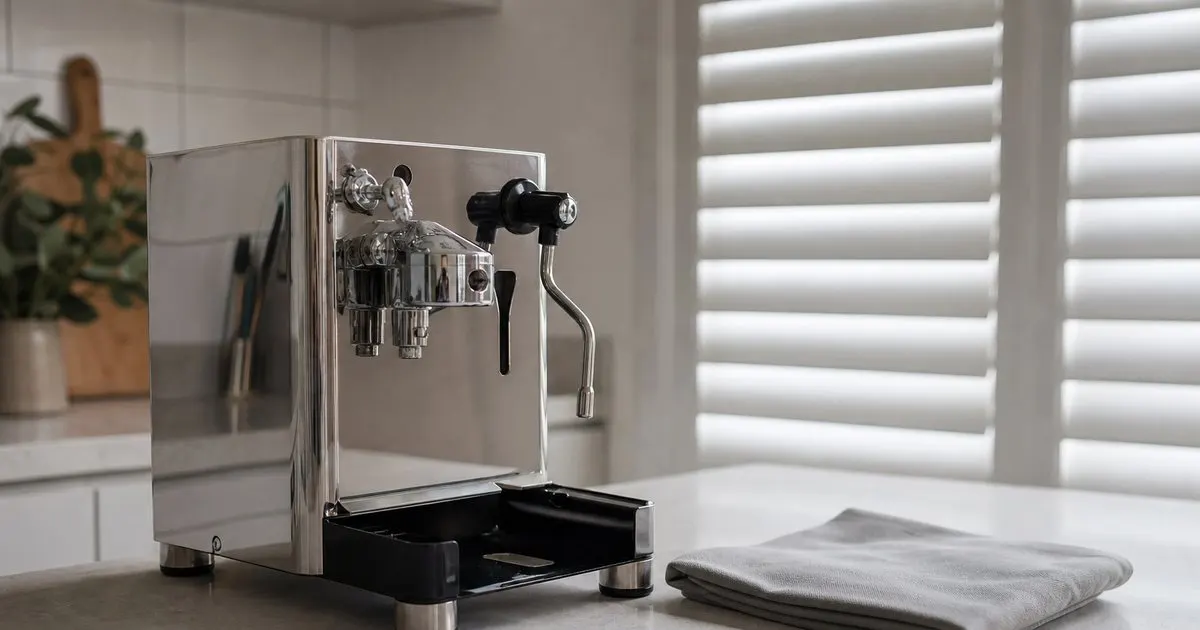
What actually changes inside a machine left standing
A prosumer machine holds several liters of water across its brew boiler, steam boiler, and connecting lines, and that water does not simply wait. Left warm or lukewarm and undisturbed, it loses dissolved oxygen, picks up flavor from brass and rubber, and gives biofilm a comfortable place to establish itself in the low flow corners of the system. Owners who return from a long trip and pull a shot immediately often describe it as flat, metallic, or faintly stale, and the cause is rarely the coffee. Related: What actually separates a prosumer espresso machine from an everyday home model?
The second change is mechanical. Group gaskets and portafilter seals are rubber compounds that stay supple partly because they are regularly compressed and wetted. Left dry and clamped for weeks with a portafilter locked in place, they take a set and lose their grip, which shows up as a portafilter that suddenly needs more force or leaks at the edge. Pump vanes and rotary seals also prefer to be wet. None of this is catastrophic, but all of it is avoidable with a shutdown routine that takes about fifteen minutes.
Keep reading: What actually separates a prosumer espresso machine from an everyday home model?, How important is a dual boiler when choosing a luxury espresso machine?, Should you pair your espresso machine with a separate high end grinder?. See how Cremaholm helps you a connoisseur guide to prosumer and luxury espresso machines.
A shutdown routine for absences of one week to one month
Start by cleaning while the machine is still hot, because detergent works far better at brewing temperature. Run a full backflush cycle with your usual cleaner, then several water-only cycles until the water running from the group is completely clear. Pull the shower screen and dispersion block if your design allows tool-free removal, soak them, and refit them clean. Purge and wipe the steam wand, then open it briefly to clear milk residue and condensation from the tip and the internal passage. Related: How do you plan plumbing and water treatment for a luxury espresso setup?
Then empty everything that can hold standing liquid. Remove and wash the drip tray, empty and dry the reservoir on a tank-fed machine, and leave both out or ajar so air can circulate. Unlock the portafilter and store it separately so the group gasket rests uncompressed. On a plumbed machine, close the supply valve at the wall after the boilers are up to pressure, and power the machine down at its main switch rather than only at a smart plug. Leaving a machine cold with closed boilers and no standing water in the tray is a good state for a few weeks.
Longer absences, second homes, and the freezing question
Past roughly a month, and certainly for a seasonal property, the calculus shifts from stagnation to freezing and corrosion. Water expanding inside a brass boiler or a copper line can split a joint that no service technician will be able to repair invisibly, and this is the single most expensive mistake in the category. If the room can drop below freezing at any point, the machine must be drained, not merely switched off. Most manufacturers document a drain procedure using the boiler drain valve or the hot water tap combined with the safety valve, and the manual is the authority here rather than general advice.
For unheated homes, consider whether the machine should travel with you instead. A drained machine is lighter than most owners expect, and original crating stored flat in a closet turns a difficult move into an easy one. If the machine stays, drain both boilers as far as the design permits, leave every valve and tap open so residual moisture can evaporate, and remove the water filter cartridge, which is an organic medium that should not sit wet and warm for months. Cover the machine loosely with cotton rather than plastic, since sealed plastic traps humidity against chrome and encourages spotting.
Bringing it back and re-dialing without frustration
On your return, treat the first hour as commissioning rather than coffee making. Refit the filter cartridge, open the water supply or refill the tank, and let the machine fill and heat fully before touching anything else. Draw and discard a generous volume of hot water from the tap to exchange the steam boiler content, run the group for twenty to thirty seconds to flush the brew circuit and thermosyphon, and open the steam wand until the flow is dry and steady. Then discard that water and repeat once. Only after that should the first shot go into a cup. Related: How important is a dual boiler when choosing a luxury espresso machine?
Expect the grinder and the coffee, not the machine, to be your real problem. Beans that sat through your absence have staled, and burrs holding weeks-old fines will produce an inconsistent first few doses. Purge fifteen to twenty grams through the grinder, open fresh coffee, and dial in from a slightly coarser starting point than you left at, since stale grounds behave differently under pressure. Give the machine a full warm-up before judging temperature stability, and reserve any conclusions about a fault until you have pulled several shots on fresh beans. Related: Should you pair your espresso machine with a separate high end grinder?
- Clean hot, then empty everything that holds water: tray, reservoir, and the portafilter left unclamped.
- For plumbed machines, close the supply at the wall and switch off at the machine, not just a smart plug.
- Any risk of freezing means draining the boilers, since a split boiler or joint is a repair worth avoiding entirely.
- Pull the water filter cartridge before a long absence and flush both circuits twice before the first shot on return.

Julien Jimenez
Julien Jimenez is an independent software builder based in Paris. He designs, ships, and operates focused SaaS products for small businesses and independent professionals. Read the full author page.
Cafe-Grade Espresso, At Home
A connoisseur guide to prosumer and luxury espresso machines. Cremaholm is built to help you put this into practice.
Find your machineMore from the Cremaholm blog

Get the complete espresso machines guide
Our full buying guide, the price guide, and new research as we publish it. One email, no spam, unsubscribe any time.