When should you rebuild an aging prosumer espresso machine instead of replacing it?
A decade old machine can be reborn with new seals and a pump, or it can quietly become a money pit. Here is how to tell which one is on your counter.
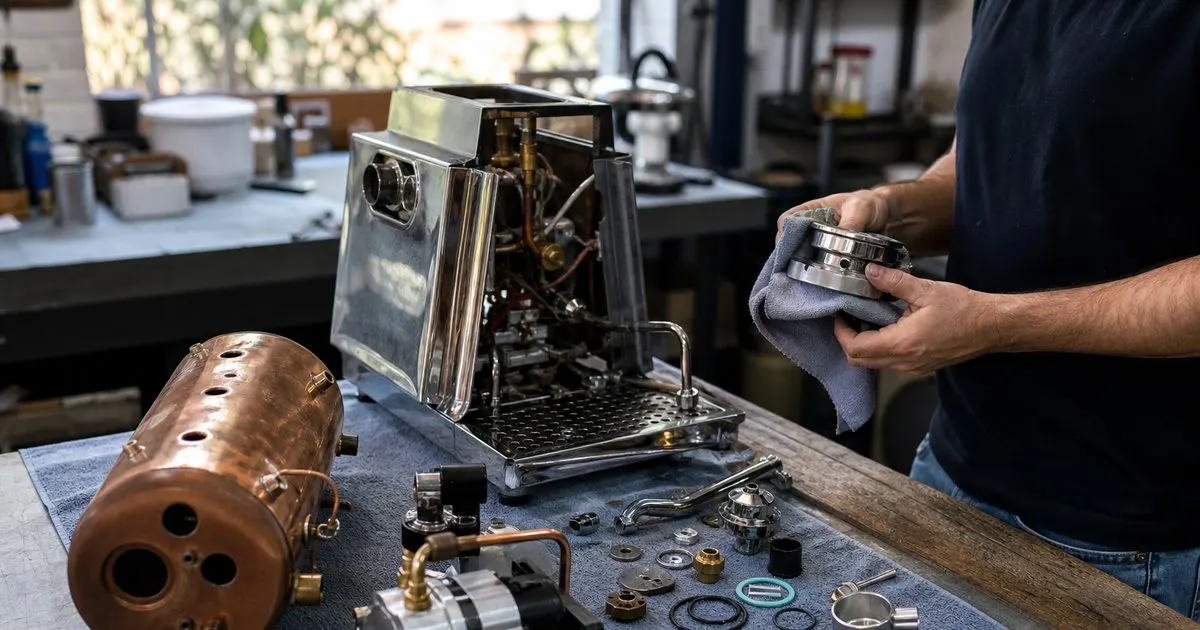
What wears out, and what almost never does
The heart of a prosumer machine, the boiler, the group casting, the frame, and the panels, is built to outlast its owner. What wears are the consumables and the moving parts: group gaskets and shower screens, the vacuum breaker, the pump, the solenoid valves, the pressurestat or the temperature sensor, the heating element, steam and hot water valve seals, and the various tubes and fittings. Every one of these is a replaceable component on a well designed machine, and most of them cost a small fraction of the machine's price. Related: What actually separates a prosumer espresso machine from an everyday home model?
That is why a rebuild is often the rational choice. A machine that is ten or fifteen years old with a tired pump, hardened gaskets, and a lazy vacuum breaker can be restored to as-new performance with a weekend of work or a single visit to a technician. The frame and boiler remain exactly as good as the day they left the factory, provided scale has not been allowed to accumulate unchecked for years.
Keep reading: What actually separates a prosumer espresso machine from an everyday home model?, How important is a dual boiler when choosing a luxury espresso machine?, Should you pair your espresso machine with a separate high end grinder?. See how Cremaholm helps you a connoisseur guide to prosumer and luxury espresso machines.
When a rebuild makes clear sense
Rebuild when the machine's fundamental design still pleases you, parts remain available from the manufacturer or reputable third parties, and the boiler shows no significant corrosion or scale damage. A rebuild also makes sense when the problems are the classic ones: leaks at the group, weak steam, a noisy pump, slow heat-up, or inconsistent temperature. These are symptoms of consumables, not of a machine reaching the end of its life. Related: How important is a dual boiler when choosing a luxury espresso machine?
Consider the cost honestly. Price the full set of parts you need, add labor if you will not do the work yourself, and compare the total to what a new machine of equivalent quality would cost. In most cases the rebuild is a small fraction of replacement, and you keep a machine whose quirks you already know. Many owners also use a rebuild as the moment to add a PID controller, a flow control device, or a better steam tip, which transforms an older design for very little money. Related: What does PID temperature control really do for espresso quality at home?
When replacement is the better decision
Replace when the boiler is compromised. Deep pitting, cracked welds, or a heating element port that has corroded beyond the reach of a new gasket are expensive to remedy and rarely worth it on a home machine. Replace when key parts are no longer made and the substitutes require machining or improvisation, because every future repair becomes a project. And replace when the machine's design cannot give you what you now want: if you have discovered light roasts and crave pressure profiling, or you have moved to a plumbed installation and want a rotary pump, no rebuild will get you there.
There is also a quieter reason to replace. If you find yourself pulling fewer shots because the machine is slow, loud, or fussy, that is a cost too. A machine you avoid is not serving its purpose, and a modern design with a fast heating group and a quieter pump may return coffee to the center of your morning. Be honest about whether you are keeping the old machine out of thrift or out of habit.
Doing the rebuild well
Order a complete gasket and seal kit rather than individual parts; the small o-rings and valve seals you did not plan to replace are the ones that will leak next month. Descale before, not after, the rebuild, so that new parts start in a clean system. Photograph every step of disassembly, label tubing, and lay parts out in order. Tighten group and boiler fittings by feel and in stages, and test the machine outside the kitchen with the panels off before declaring victory.
If you prefer to send the machine to a technician, choose one who specializes in your brand and ask for a written list of what will be replaced. A full service typically includes descaling, all gaskets and seals, a vacuum breaker, and a pressure check, with the pump and element replaced as needed. Shipping a heavy machine both ways is a real expense, so a local technician is worth a somewhat higher labor rate. Either way, a rebuilt machine deserves the same water treatment and cleaning routine that would have prevented the rebuild in the first place. Related: How do you plan plumbing and water treatment for a luxury espresso setup?
- Boilers, groups, and frames last for decades; gaskets, pumps, valves, and elements wear and are replaceable.
- Rebuild when parts are available, the boiler is sound, and the symptoms are classic consumable failures.
- Replace when the boiler is compromised, parts are gone, or the design no longer suits how you drink coffee.
- A full seal kit, a descale first, and careful documentation make a rebuild succeed.

Julien Jimenez
Julien Jimenez is an independent software builder based in Paris. He designs, ships, and operates focused SaaS products for small businesses and independent professionals. Read the full author page.
Cafe-Grade Espresso, At Home
A connoisseur guide to prosumer and luxury espresso machines. Cremaholm is built to help you put this into practice.
Find your machineMore from the Cremaholm blog
Get the complete espresso machines guide
Our full buying guide, the price guide, and new research as we publish it. One email, no spam, unsubscribe any time.